


The Alignment Planner
The Alignment Planner
Bundle & Save
Couldn't load pickup availability

Get it between - and -.


Collapsible content
PRODUCT DETAILS
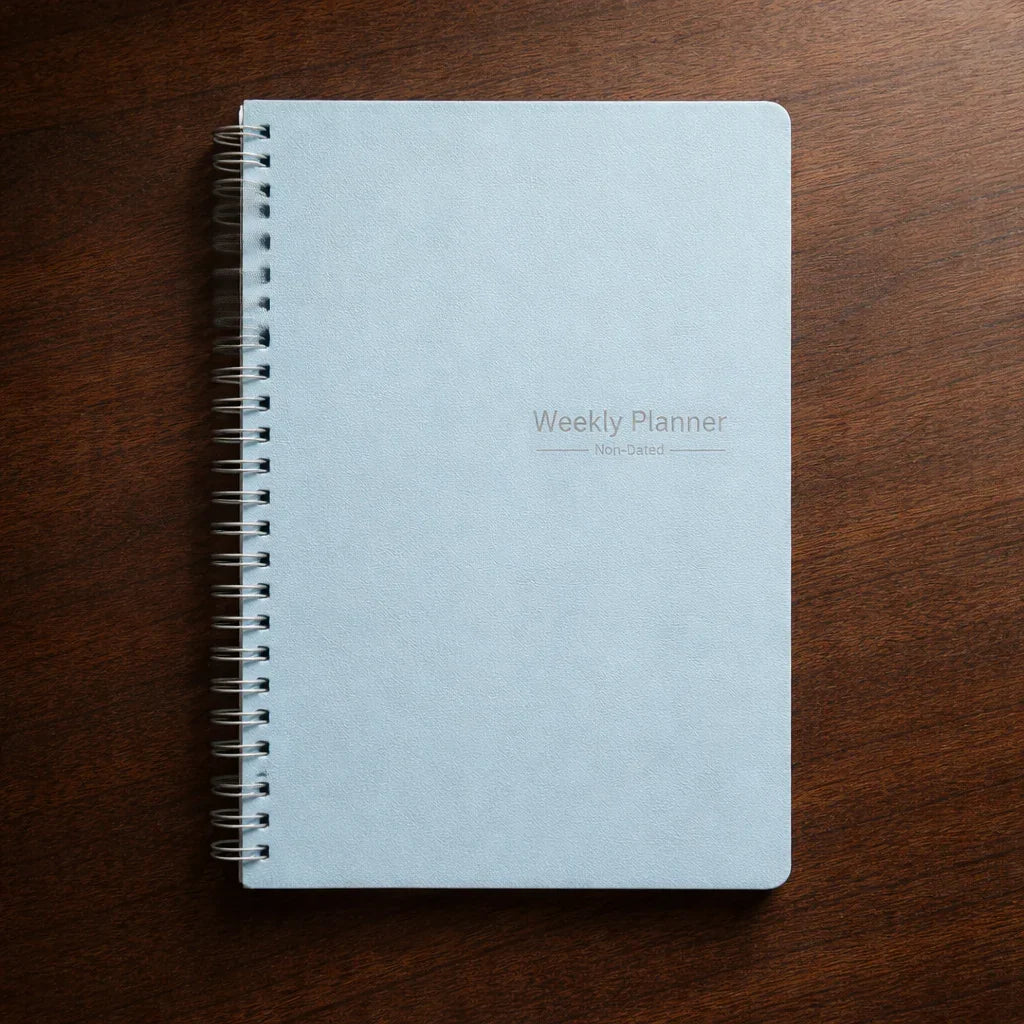
- A5 spiral-bound weekly planner — undated format, start any time
- 100g Dowling paper — bleed-resistant with ballpoint, gel, felt tip, and light fountain pens
- PP plastic waterproof cover, rounded corners, twin-wire binding
- Each spread: weekly focus, 7 weekly goals, to-do list, Mon–Sun daily columns, and habit tracker grid
- 100–200 pages (approx. 52 weeks)
- Dimensions: 21cm × 14.5cm × 0.8cm | Weight: 200g
HOW TO USE IT
- Start any week — write your week number or date at the top. No pre-printed dates means no pressure to stay current.
- On Sunday evening or Monday morning, write 3–5 weekly goals. Keep them specific and small enough to finish.
- Use the to-do column for tasks that must happen this week — not everything, only what actually matters.
- Fill daily columns as the week unfolds: appointments, priorities, or simple notes.
- Track habits in the grid at the bottom. Mark each day honestly — the point is visibility, not perfection.
- At week's end, review what was completed. Carry forward only what still matters. Leave the rest behind.
SHIPPING & RETURNS
- Orders shipped within 1–3 business days
- Standard delivery: 7–11 business days
- Express delivery available at checkout
- Free returns within 14 days for damaged or defective items
- Questions: help@naminer.com
For More Information, Click Here
-

See your whole week in one view
Goals, tasks, and habits on a single spread. No flipping pages, no switching sections.
-

Start any time. The undated format means you never fall behind
Skip a week and continue without guilt or wasted pages.
-

Built-in habit tracker makes consistency visible
Not as pressure, but as honest feedback about what is actually working.
-

100g paper handles every pen type without bleed-through
Use what you already have, not what the planner demands.


FAQs
Is it suitable for someone who has never stuck with a planner before?
It is specifically designed for that person. The layout is minimal by intention — fewer prompts mean less cognitive load. Use what helps, leave the rest blank. The planner works even when your use of it is imperfect.
Is this planner dated or undated?
Undated. There are no pre-filled months, weeks, or days. You write your own week number or date at the top of each spread. Start at any point in the year, skip weeks without falling behind, and never feel behind.
Will it work with fountain pens or markers?
Yes. The paper is 100g Dowling stock, which resists bleed-through with ballpoint, gel, felt tip, and light fountain pen use. Very wet fountain pens or heavy alcohol markers may show slight ghosting on the reverse — test one page first if you use broad-tipped markers regularly.
How many weeks does it cover?
100–200 pages, which covers approximately 52 weeks of use. Because it is undated, you can extend or compress that depending on how densely you write.
What if I skip a week?
Nothing. That is one of the reasons this planner is undated. Skipping a week means you start fresh on the next spread — not on a page half-filled with failure. The planner does not track time. You do.
Do the lids actually stay closed?
Yes. The lids use a push-and-click closure that holds firmly without requiring force to open or close. Multiple customers specifically mention the lids as a meaningful improvement over cheaper organizers they had used before.
-

The psychology of single-page clarity
Working memory holds roughly 4–7 chunks of information at once. Most planners fragment the week across multiple pages, forcing the brain to carry context mentally as it flips.
The Alignment Planner places the entire week on a single two-page spread — goals and daily tasks visible at the same time. Less navigation means more mental space for the actual work. -

THE SUNDAY RESET
The most common use pattern: ten minutes on Sunday evening. Write this week's goals on the left page.
Move anything unfinished from last week into the new to-do column. Fill the habit tracker with what you are working on.
Close the planner. Monday morning, you open to a week that already has a structure — not because someone else imposed it, but because you set it.

